I could not agree more that we should not have a government shutdown. I could not agree more that we need to take steps to protect and improve our economy. And, I could not agree more that we need to take steps to make sure that our brave uniformed men and women are fairly compensated and otherwise treated.
I must, however, express my profound, albeit respectful, disagreement with my colleague, the junior senator from New Jersey. This is not a possible shutdown that we’re facing as a result of the Republican party or the Tea Party.
As a life-long Republican and a founding member of the Tea Party caucus, I can tell you there is not one member of this body, nor is there one member of the senate Tea Party Caucus who wants a government shutdown.
Republicans have, from the outset of this, attempted to bring forward proposals to make sure that we don’t get into a shutdown. The question we need to ask ourselves, is why does the President of the United States, President Barack Obama, want a government shutdown?
Let’s ask a few questions:
Why was it that a few months ago, after the election, but before the new congress tookover, when the president had both houses of congress under the control of his party, why did he opt not to pass a full budget for fiscal year 2011?
That was the first seed that he sowed in the direction of a government shutdown.
I submit that it was one that was either irresponsible on the one hand or deliberate and malicious on the other intending to bring about a sequence of events that would culminate in agovernment shutdown.
Number two, even after the new congress convened, after the balance of power shifted in the House of Representatives and after a number of seats in this body shifted, the new Congress convened in January of this year. The President didn’t bring forward something that could attract both houses of congress to approve and that he could fund the government with for the balance of the year. He, instead, chose to operate on a series of continuing resolutions. We’re now moving again with what I believe will be our seventh continuing resolution if it’s passed.
What we have from the president is radio silence in the direction of what we need to do to move forward. A number of us have suggested all along in this process that at a point in time in America when we have a national debt approaching $15 trillion, at a point in time when we’re adding to that debt at a staggering $1.7 trillion a year, it doesn’t make sense and it isn’t responsible to continue even in small increments perpetuating that degree of reckless deficit spending.
So what we want to see more thananything, isn’t any specific set of social issue legislation. It’s not any specific degree of spending cuts. It is, instead, a plan that will move us in the direction of a balanced budget. That will put us on track so that we might once again enjoy the benefits of a balanced budget.
So we might again enjoy the day and age when we don’t have a debt to GDP ratio well inexcess of 90%. Because we know when we have a ratio in excessof 90%, which we do now, it slows economic growth in this country by more than half,costing our economy as many as a million jobs every single year.
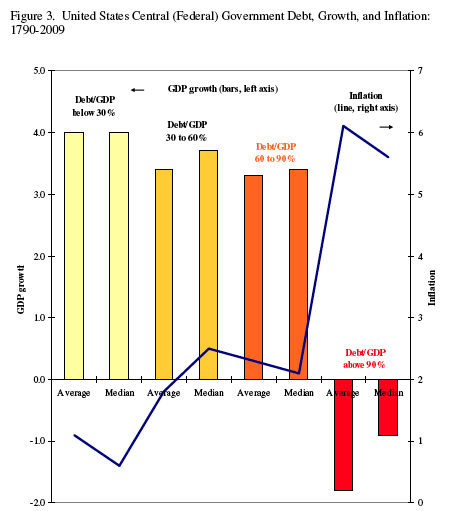
This is ultimately about jobsbecause our sprawling debt kills jobs and economic growth necessary to create jobs. So, no, this is not a quixotic quest for perfection.
This is simply a quest for that which will suffice to get us back on track towards fiscal responsibility.
Now, I mentioned two seeds that the president has planted to lead to a shutdown. The first being his refusal to push through a budget for the entire year for fiscal 2011.
The second being his reliance on continuing resolutions. The third seed he sowed, one that I’m not sure we’re going to be able to get around this time, much as we would like to is his threat, just in the last hour or two — his threat, his promise to veto the continuing resolution that the house is expected to be passing this afternoon and that it may have passed just moments ago. He’s threatening to veto that before it even gets over here.
One must wonder, why does the president want a shutdown? We have to remember, these are not drastic changes that have been proposed. In fact, they’re not even sufficient in my opinion to get us back on track so that we can say, this heads us in the direction of an eventual balanced budget.
These are minor cuts and yet the president insists on moving us inevitably, inexorably in the direction of a shutdown. Now, while we’re on the subject of addressing a false blame that has been placed on the Republican party and on the Tea Party, I care to address the accusation that has been made by various of my colleagues, an accusation that I believe was made in ignorance and, in any event, is manifestly incorrect.
With regard to the Tea Party, this is a movement whose views are not extreme.
What is extreme is a $15 trillion debt that we’re adding to by $1.7 trillion a year.
That is extreme!
With what has happened in the last few years, including the government takeover of everything from our banking industry to our auto manufacturing industry, to our health care industry. Those things are extreme.
The tea party movement is something that is shared by many Americans, regardless of whether they ever appear at a rally of any kind. It’s a spontaneous grass-roots political phenomenon that simply recognizes that our federal government has grown too big and has become too expensive, and we need to do something about that.
Many of us who consider ourselves part of a tea party movement believe that the best solution, perhaps the only solution to this is to return to that 223-year-old founding document we call the U.S. Constitution. Look to those tasks, those powers that are identified as something within the exclusive power, control of the federal government.
The more we do that the more we can turn to constitutionally limited government of the sort that can operate on a balanced budget.
This is not necessarily even a politically conservative movement. It is neither conservative nor liberal. At the end of the day, it need not be either Republican or Democratic.
It is simply American.
It recognizes that this country is founded upon the principle that national governments, as they become large and powerful,have a certain tendency toward gaining an excess of power, and spending an excess of money, and to tyranny. A national government can function best when it has limited, enumerated powers of the sort we granted the federal government a couple of centuries ago.
Powers including things like national defense, establishing a uniform system of weights and measures, regulating trademarks, copyrights, patents and so forth. Included in that list you won’t find anything about a government takeover of health care or manufacturing industries or banking industries.
This is neither liberal nor conservative.
It’s neither Republican nor Democratic.
And it certainly isn’t extreme.
It is simply american.
It is what makes us great.
It is part of what has created– it is part of what has created the strongest economy and the greatest civilization the world has ever known.
At the end of the day, as those who have planted, quite deliberately, the seeds for an inevitable shutdown seek to blame others, we have to remember the seeds that they have sown and we have to be willing to cast blame where blame is due. The blame here cannot, and as long as I’m standing, will not be placed at the feet of the Republican party or the Tea Party.
We do not want a shutdown and we’ll do everything we can to fight against it.
If we have one, it will be because the President of the United States and members of the other party in this august body have refused to put forward a palatable, defensible budget.
Thank you.